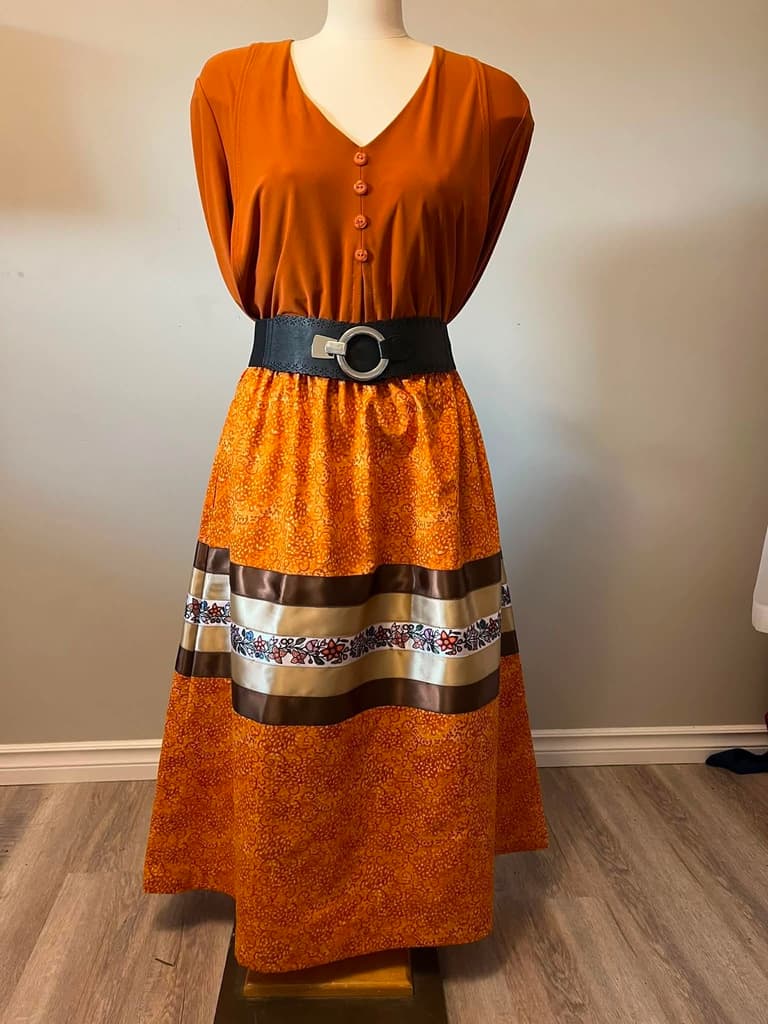
Orange batik, floral band
$175 CADAvailable
Ribbon skirt · orange batik cotton
Brown and cream either side of a printed floral ribbon. The band in the middle is what the whole skirt was built around.
Salt Spring Island, British Columbia
Ribbon skirts, beadwork and small pieces, made one at a time at home on the island. Each piece is the only one of its kind.
What I Make
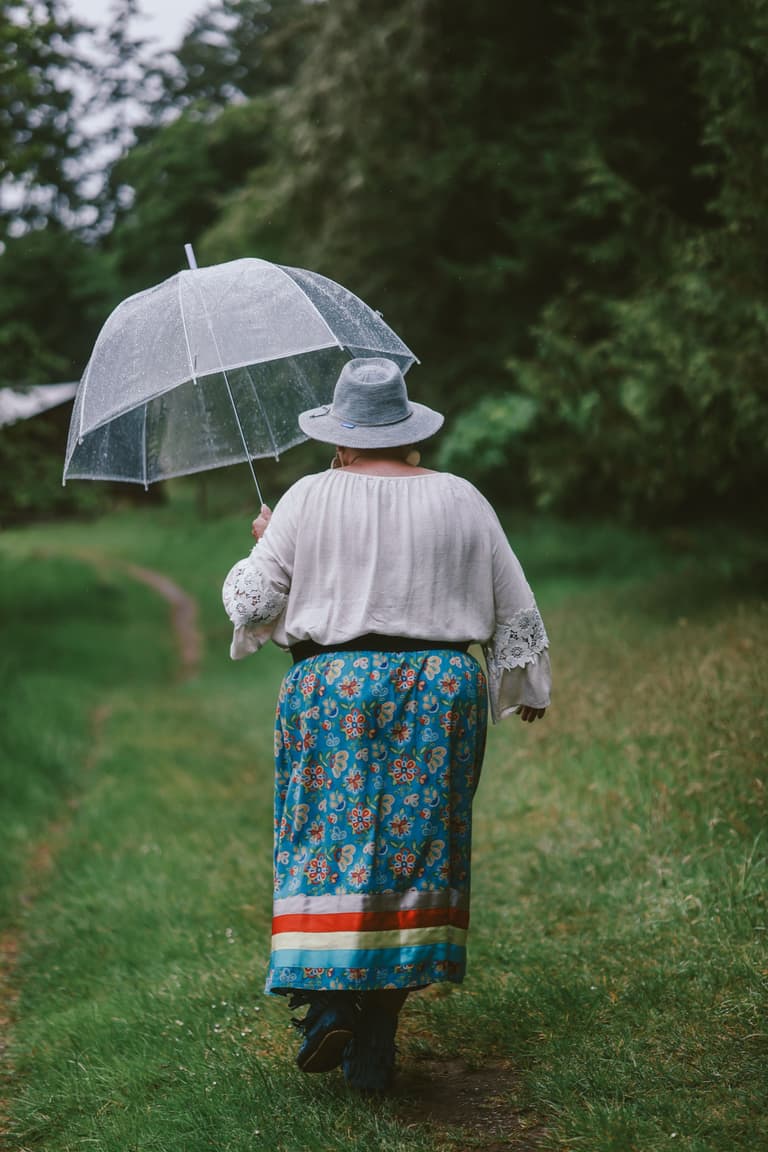
Everything is made at home on the island, a piece at a time. Nothing is made twice, because the cloth and the ribbon were bought for that one piece and then they are gone.

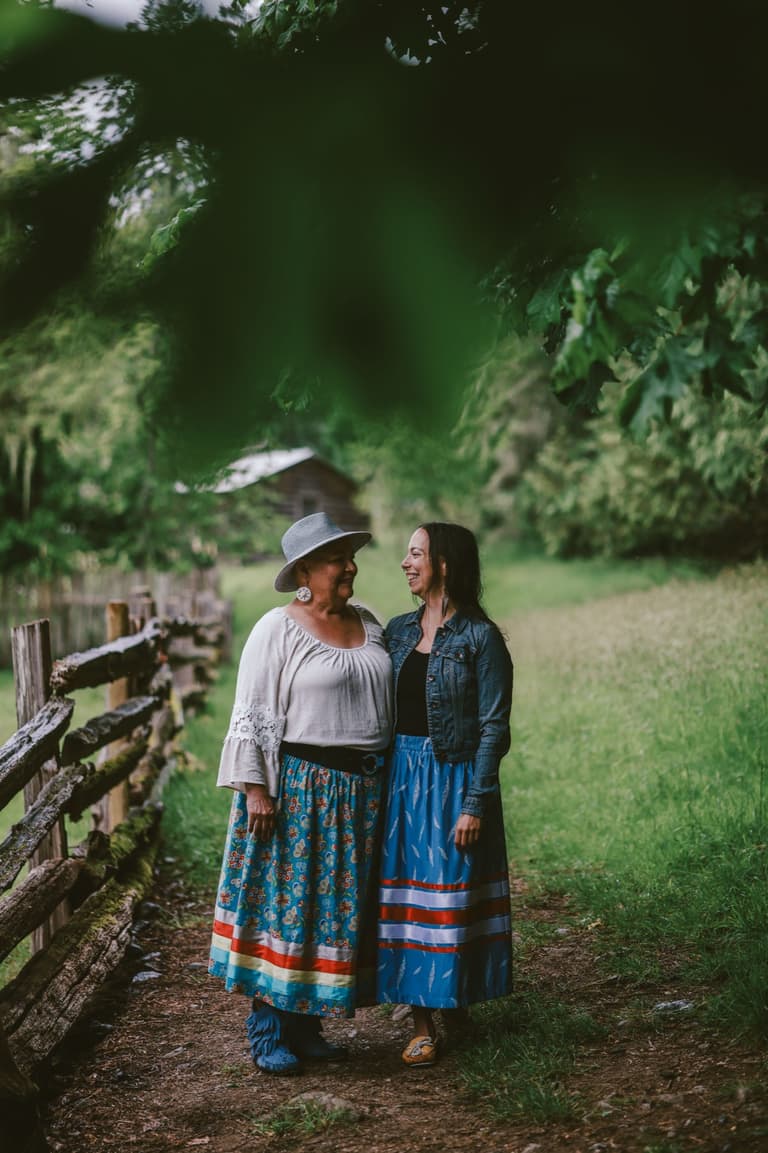
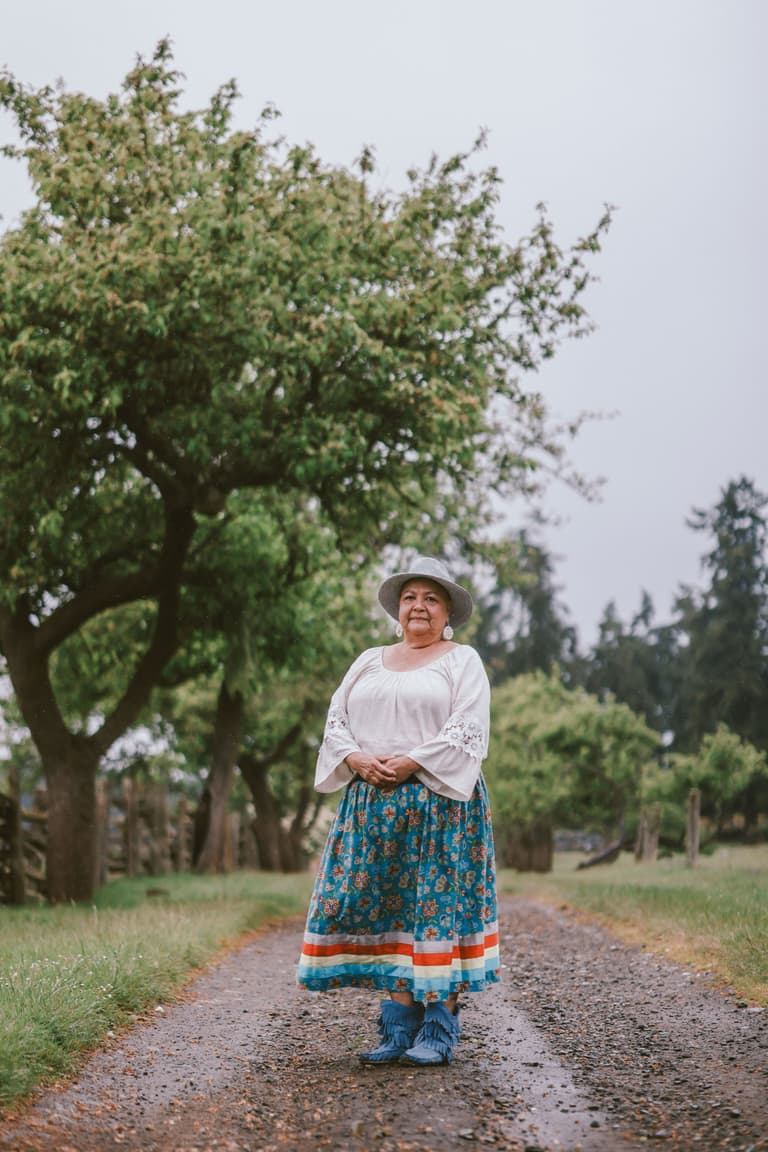
Ankle length and cut full, with satin ribbon laid in rows across the lower skirt. Cotton, and one skirt to a length of cloth. Waist and length are listed with each one.
Lavender eye pillows, ribbon skirts and shawls for Barbie dolls, scrunchies and tote bags. Small things that take as much care as anything else here. What there is changes week to week.
Cut with a deep hem so it can be let down twice. Made to be run in, sat in, and grown out of slowly.
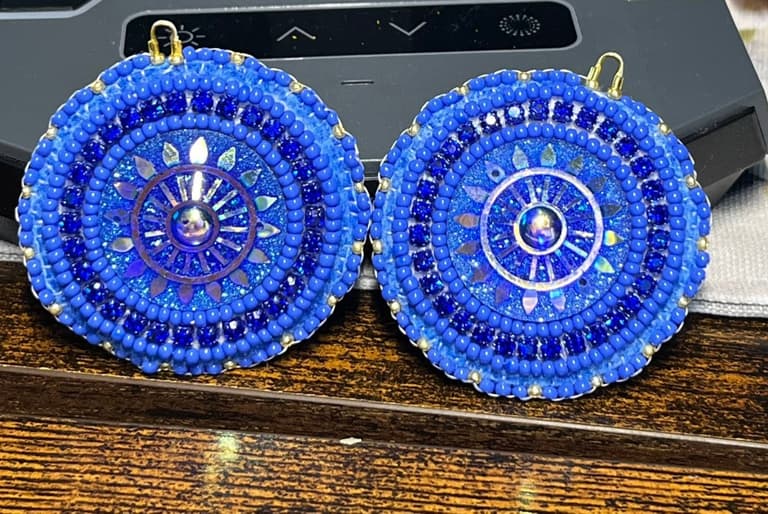
Earrings, mostly. Glass seed beads worked a few at a time onto felt, edged by hand all the way round, on hooks that will not bother your ears.
The Shop
Everything here is finished and ready to go, and there is one of each. The cloth is bought in single lengths and never repeated, so when a skirt is gone it is gone.
Ribbon skirt · orange batik cotton
Brown and cream either side of a printed floral ribbon. The band in the middle is what the whole skirt was built around.

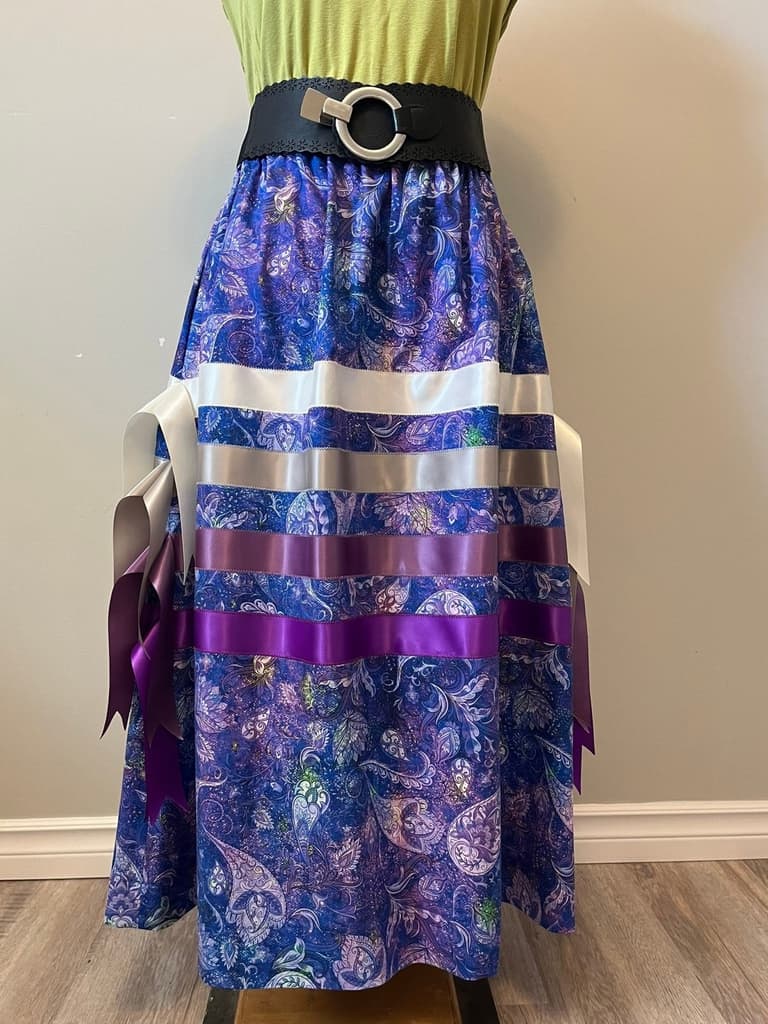
Ribbon skirt · purple and blue paisley cotton
Five ribbons running light to dark down the skirt, with the tails left long at the side seam.
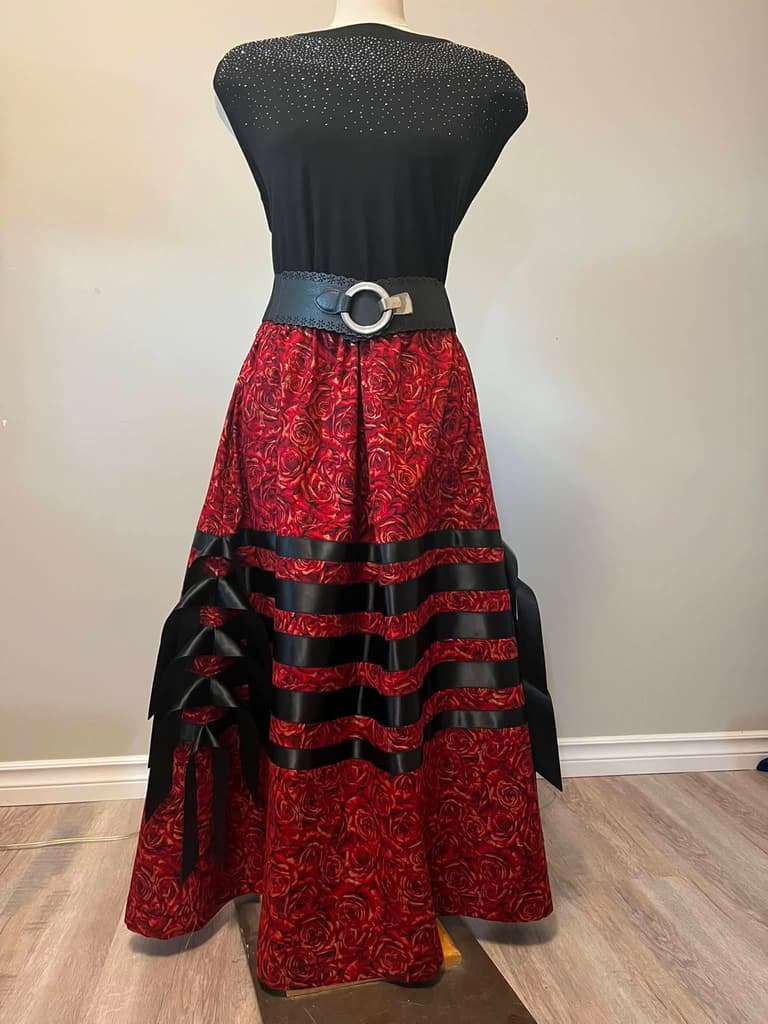
Ribbon skirt · red rose print cotton
Roses under four narrow black bands. The plainest ribbon work she does, and the first one to go.
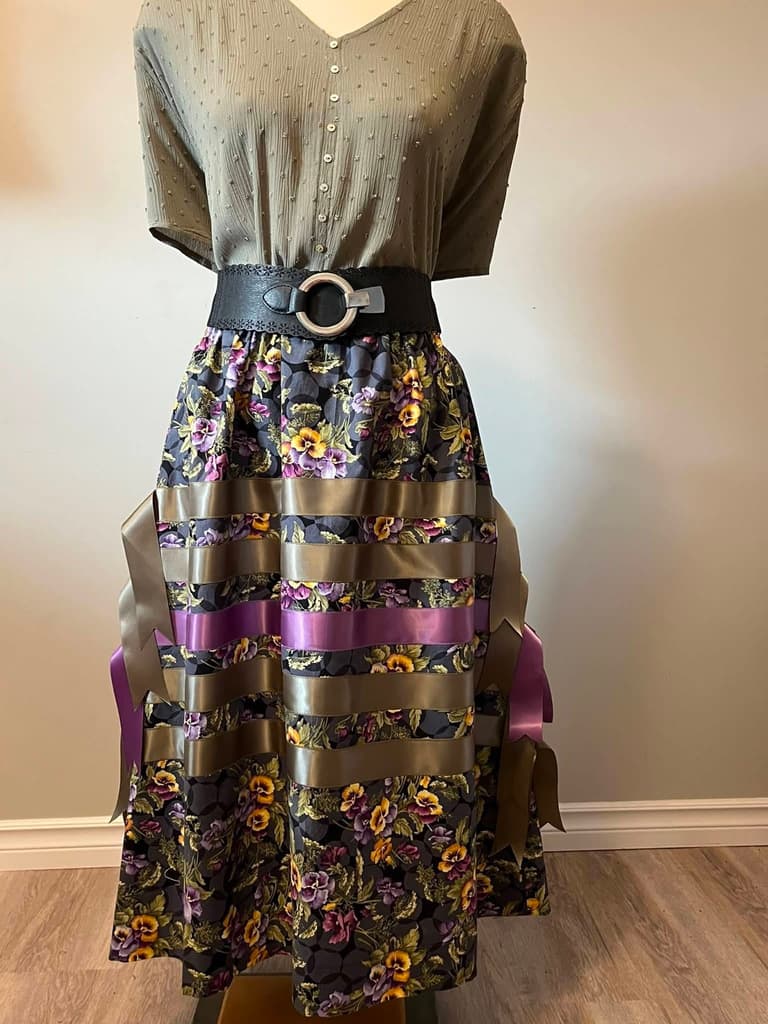
Ribbon skirt · dark pansy floral cotton
Six bands set close together so the flowers show through between them. Bows tied at both sides.
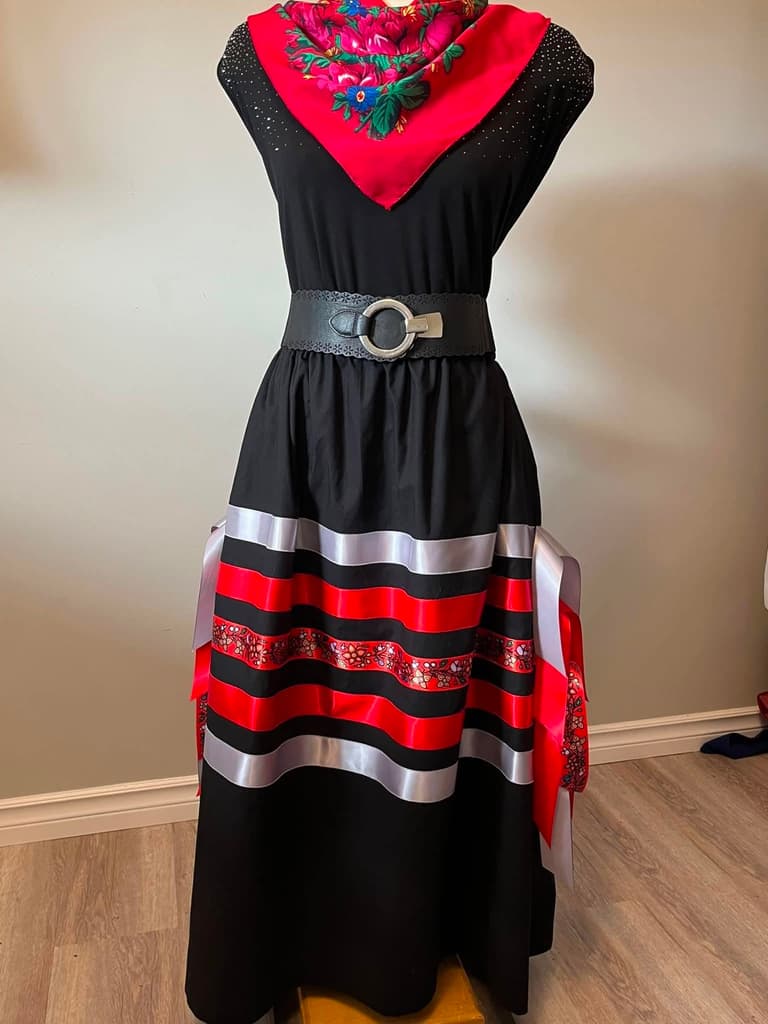
Ribbon skirt · black cotton
Plain black so the ribbons carry it. Shown with a shawl, which is how most people end up wearing it.
One of each
There is no restock and no second run. If a skirt has gone, the next one will be a different skirt in different cloth.
How it works →Beadwork
Earrings, mostly. Glass seed beads laid a few at a time onto felt, edged by hand all the way round, and finished on hooks that will not bother your ears. A pair takes an evening or three, depending on what is going on in the middle.
Beadwork · felt, glass seed beads, shell
Two rings of cut glass around a shell centre, edged in gold. The largest pair she makes, and heavy enough that they hang on lever backs rather than hooks.
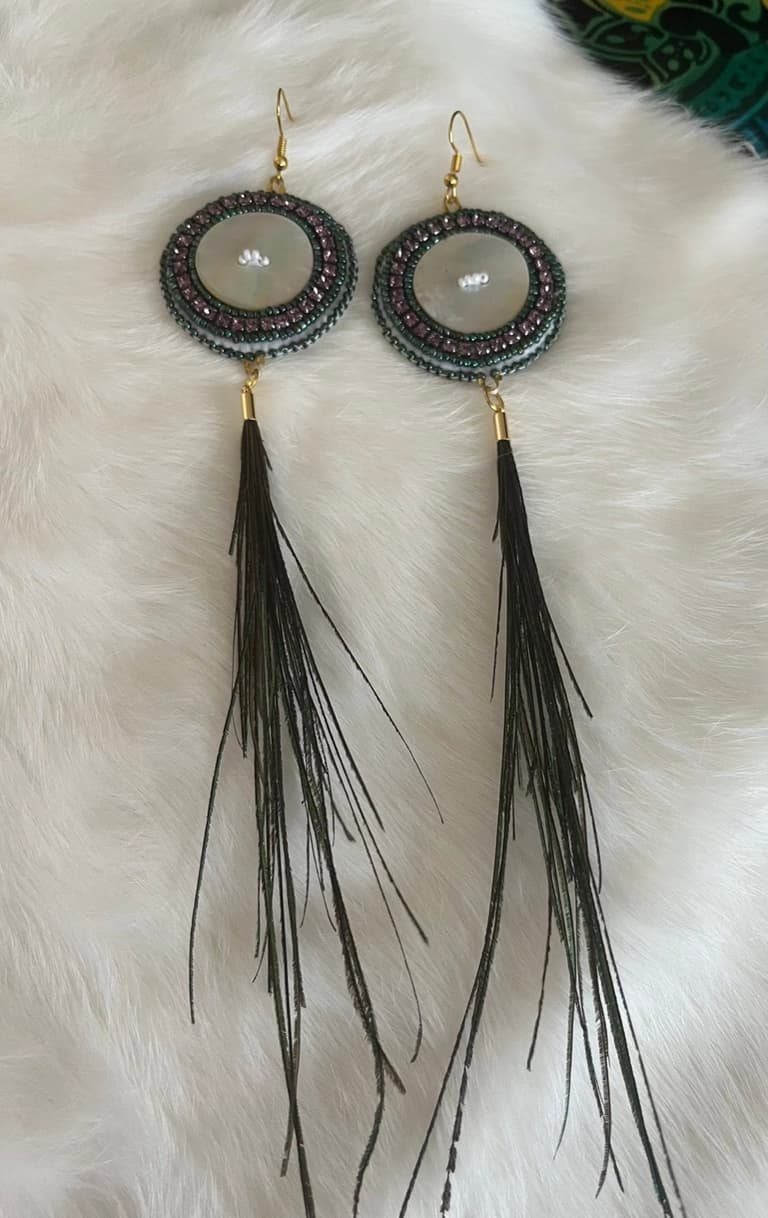
Beadwork · felt, glass seed beads, mother of pearl
Shell set in green and mauve, with a long feather drop below. They move when you do, which is most of the point of them.
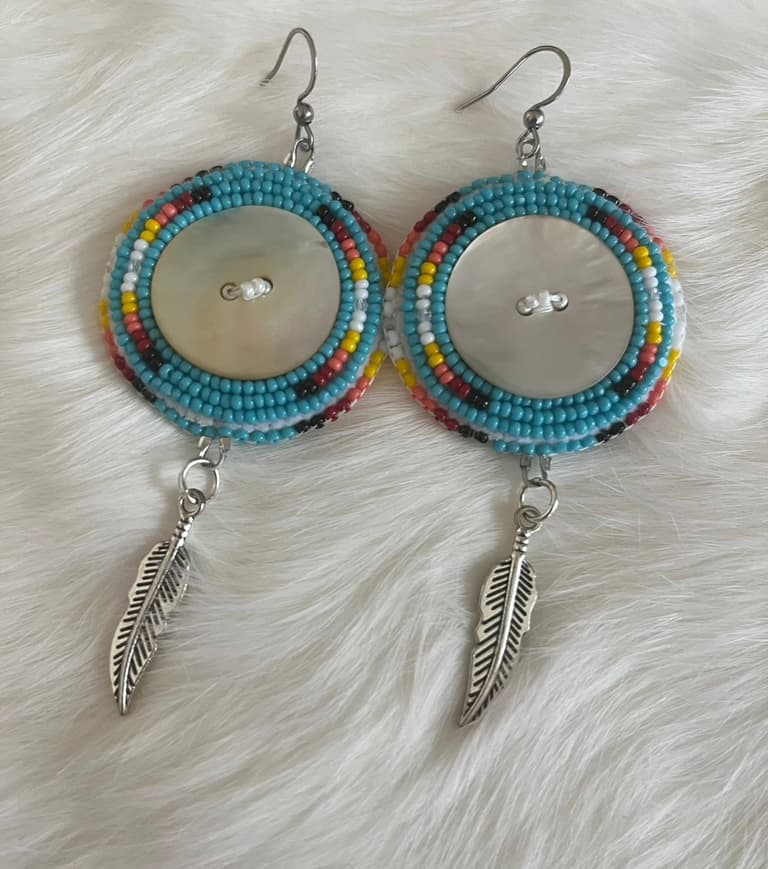
Beadwork · felt, glass seed beads, shell button
A shell button ringed in turquoise, with red, yellow, white and black worked through the outer rows, and a silver feather at the drop.
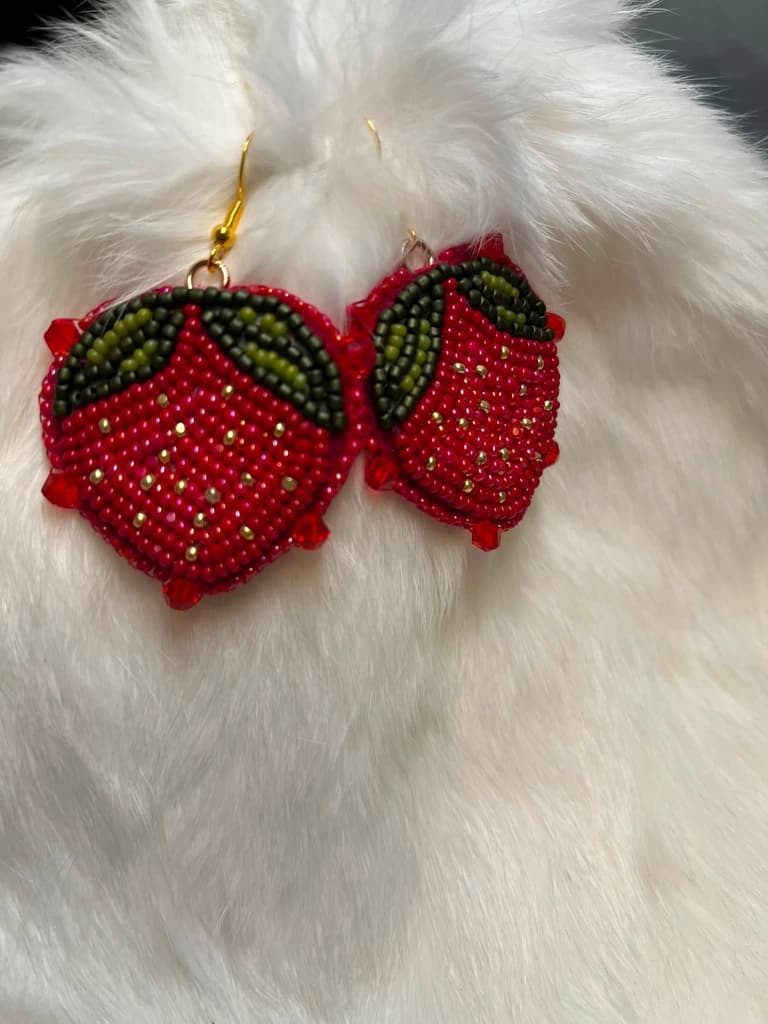
Beadwork · felt, glass seed beads, cut crystal
Beaded solid, with gold picked through for the seeds and cut crystals set around the edge. The pair people photograph most.
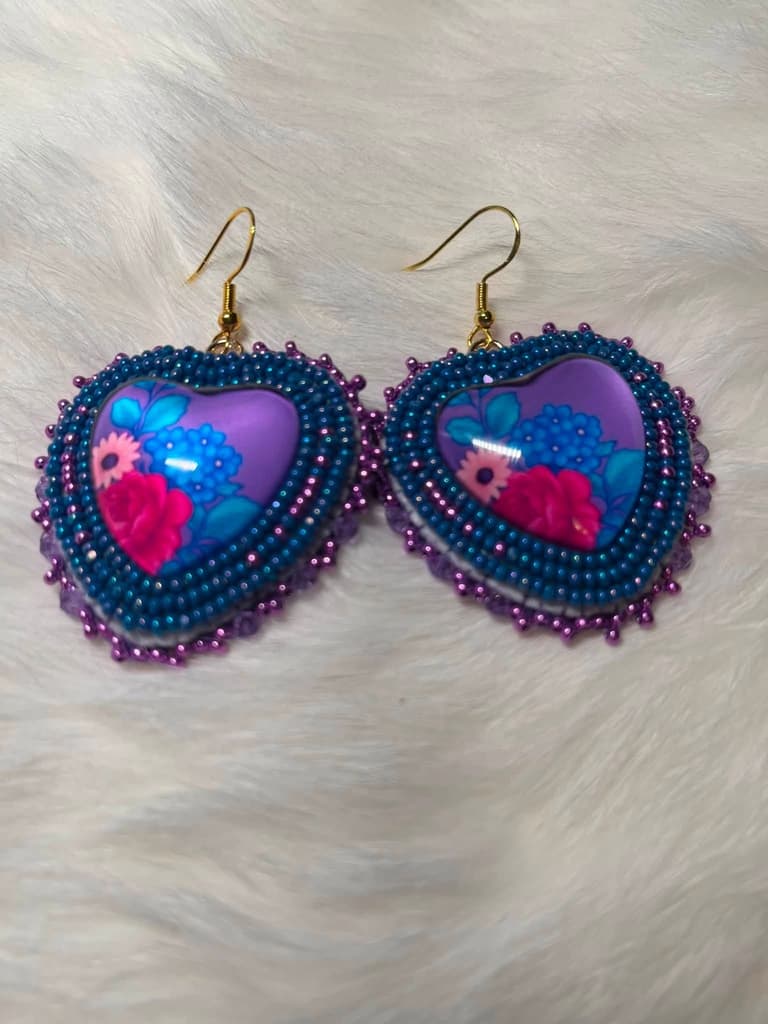
Beadwork · felt, glass seed beads, floral cabochon
A floral cabochon set into a beaded heart, with a picot edge worked in violet all the way round.
New pairs
Beadwork goes up in ones and twos, whenever a pair is done. Ask to be told when it does and you will hear before anybody else.
Tell me when →Who It Is For
These are contemporary pieces, and they are made to be worn: to a graduation, to work, to a wedding, or to the market on a Saturday. Not saved for one day a year, and not for one kind of person.
If you are Indigenous, they are made for you to wear your culture loud and proud, and beautifully.
If you are not, and you love the work and want to wear it, they are made for you too. The line between appreciation and appropriation is in how a piece is worn: with respect for where it comes from, bought from the hands that made it, and without claiming its meanings as your own.
The colours, the number of ribbons and the way they are laid out can carry meaning, and that meaning is not one thing. It belongs to the wearer, to their family and to their nation, and the teachings differ from place to place. This page will not speak for any of them.
Buying
The checkout is the easy part. The thing worth knowing before you get there is that the stock is genuinely one deep.
Each piece is made once. There is no restock, because the cloth and the ribbon were bought for that one skirt and are not bought again.
Skirts are listed with their waist and their length, and beadwork with its drop. Real measurements on the thing itself, not a size chart to guess from. Check them before you buy: every sale is final, with no returns or exchanges.
If a piece is close but not quite right, say so before you buy it or after. Taking in a waist or shortening a hem is usually a small job, and it is better asked than guessed at.
Posted anywhere in Canada, usually within a day or two, because it is already finished. Or collect it here on the island.
Cold water, a gentle cycle, hang to dry. Press the ribbons from the back on a low iron and never straight onto the satin.
The Maker
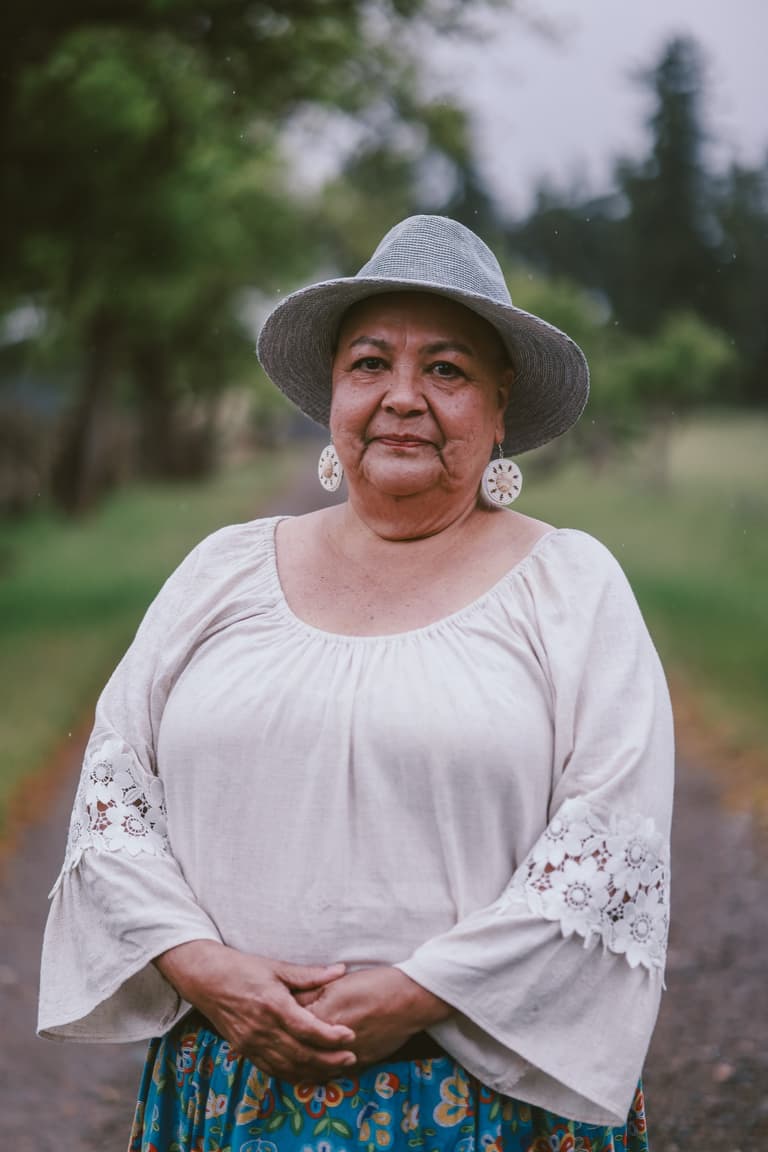
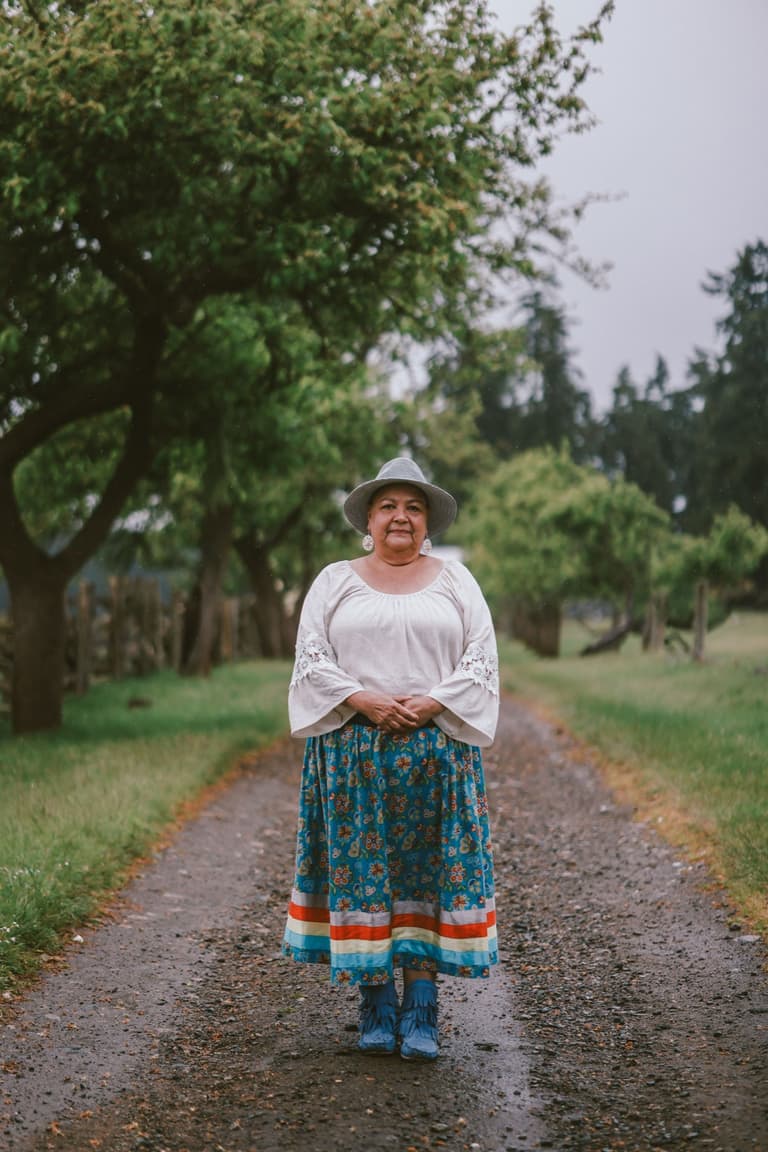
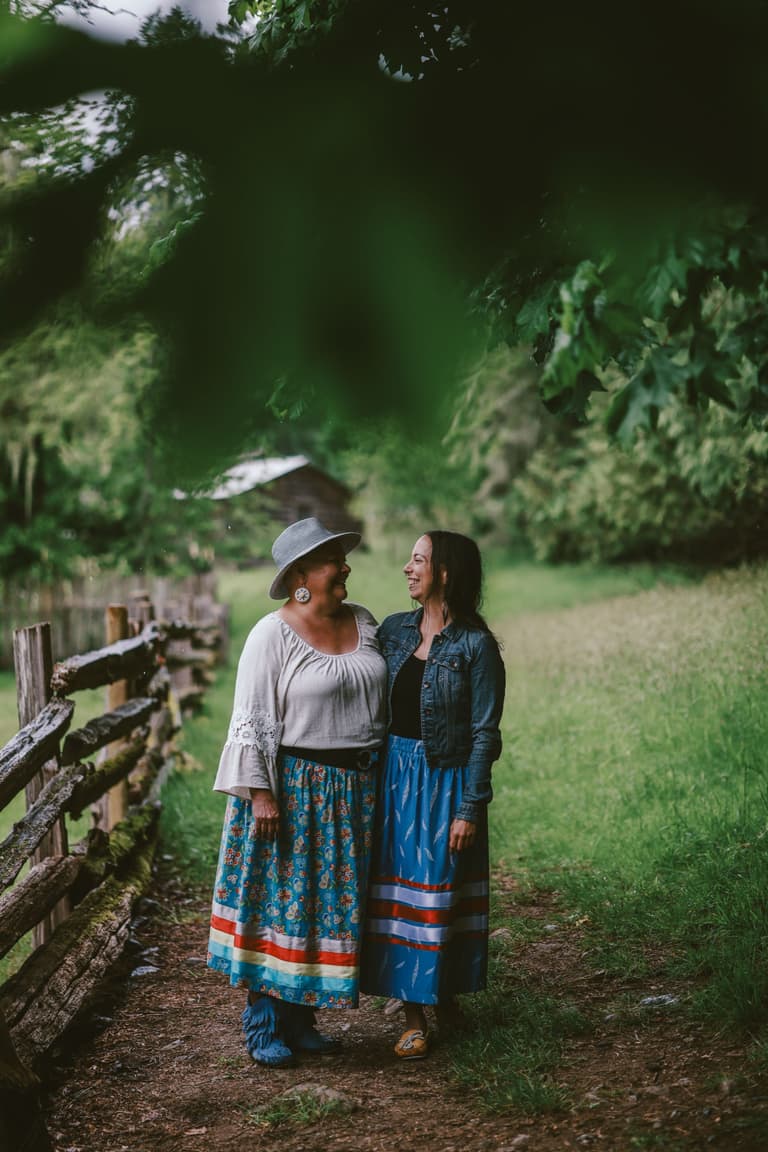
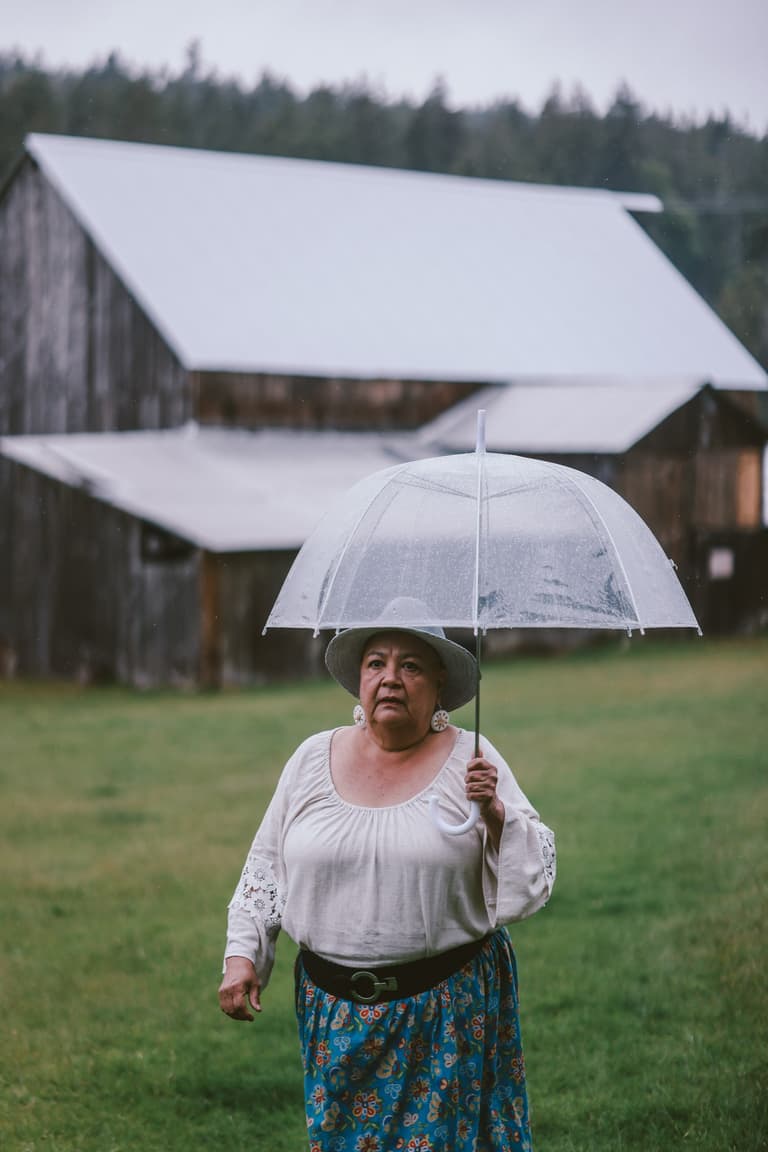
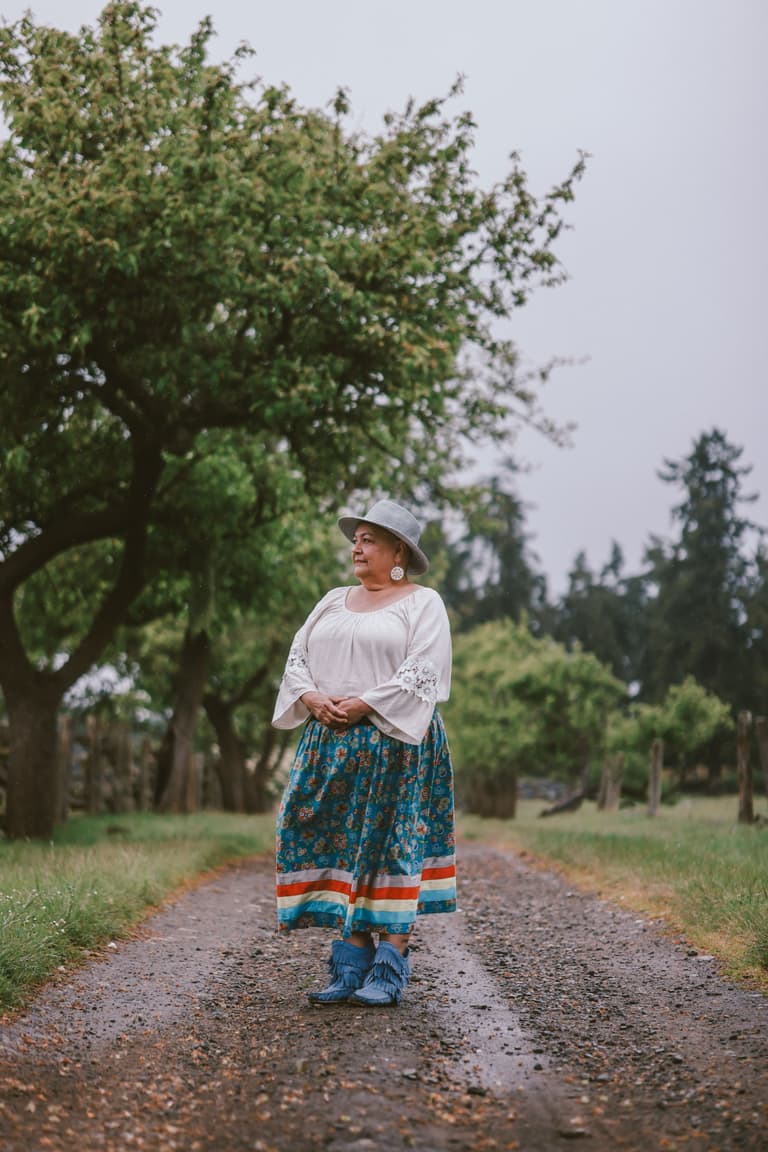
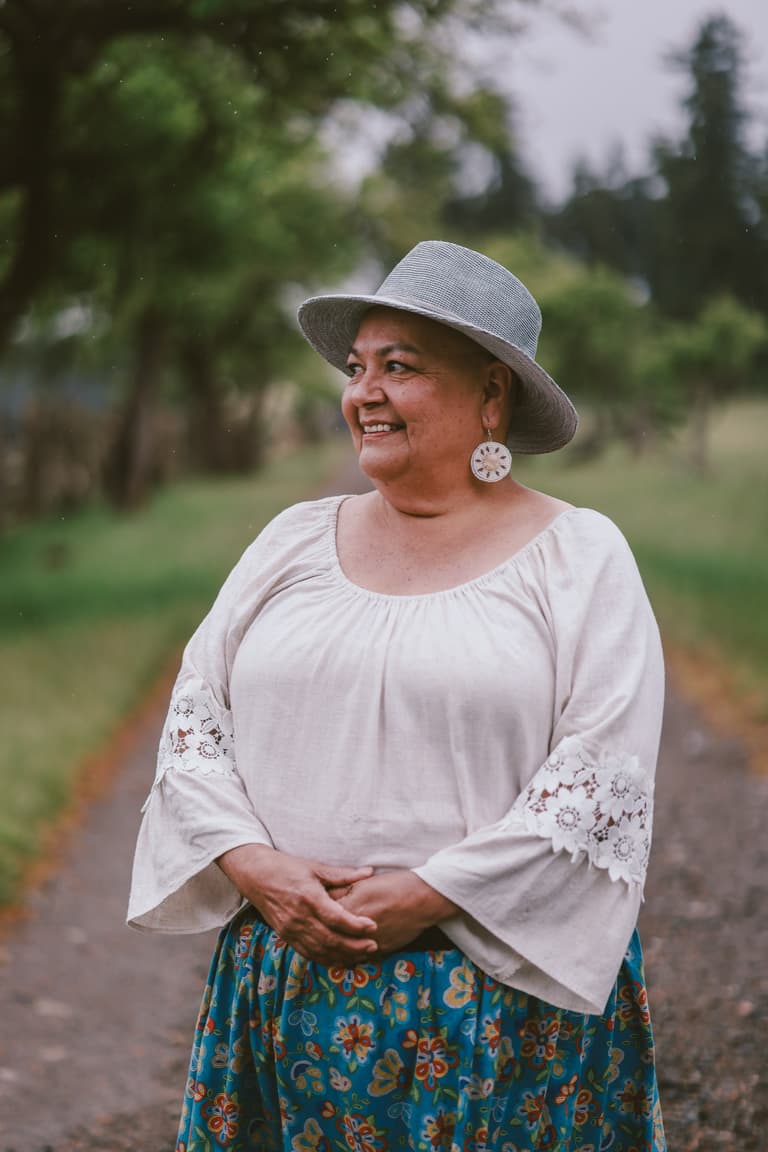
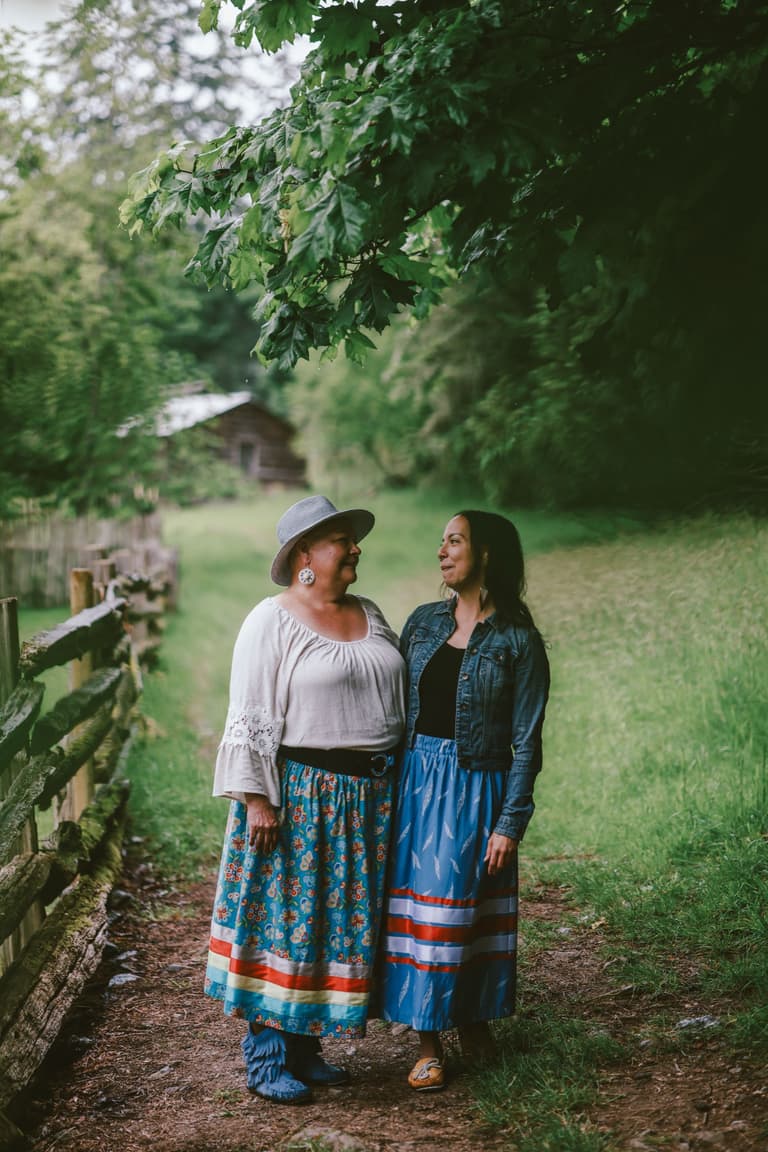
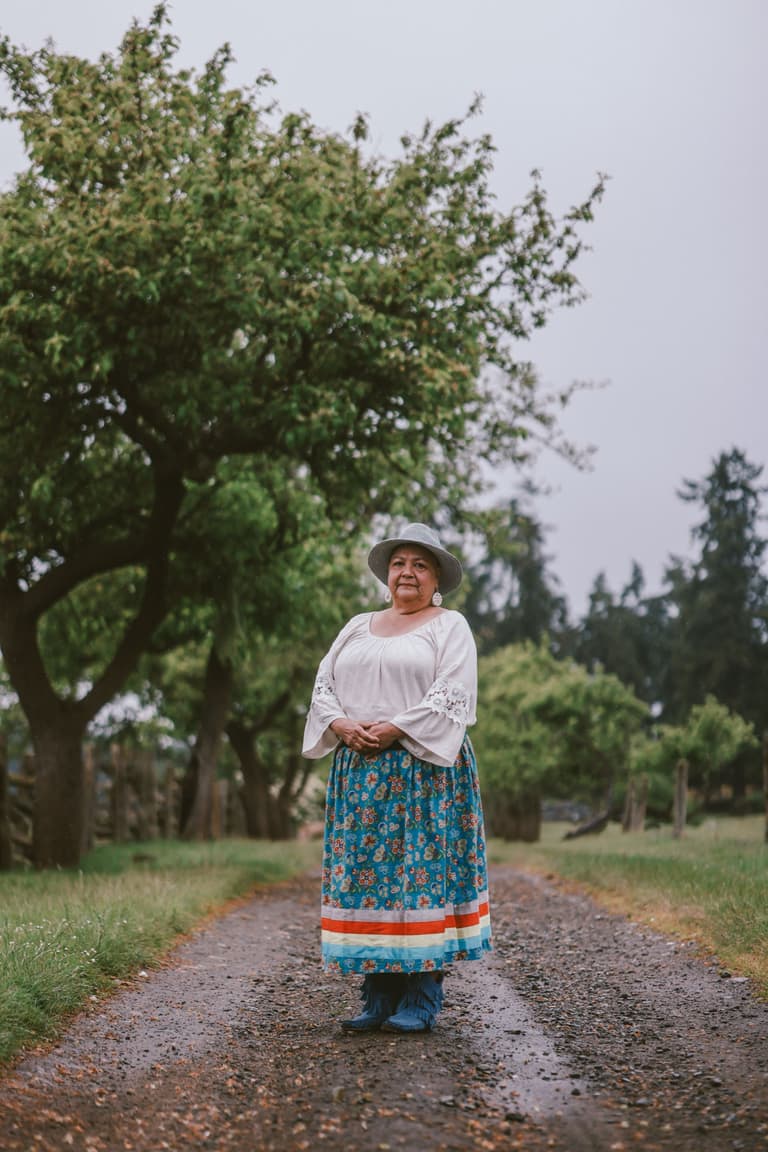
It started with skirts for the grandchildren, because a skirt made by somebody who knows you sits differently to one off a rail. Then skirts for their friends, and for their mothers, and then for people on the island who had heard there was somebody here who sewed them.
Everything is still made in the same room. There is no workshop and no staff, which is why there is only ever one of anything, and why the shop is nearly empty some weeks and full the next.
Get in Touch
Questions about a size, a colour, or whether something is still there. If you would like to hear when new pieces go up, say so and you will be told first.